
Determining the Root Cause in ISO Management Systems

Gaps and non-conformities, as well as opportunities for improvement all exist in management systems. Businesses need to constantly evolve and change to stay ahead, and this continual improvement is at the heart of the ISO Management Systems.
‘Root Cause Analysis’ is a term that often appears in business and can be a very useful tool to drive that continual improvement.
What does Root Causes Analysis mean?
The root cause is a fundamental underlying reason for a problem and if it is left unidentified, it is more than likely that the problem will occur again. The issue can only be fixed permanently once you have detected and taken the appropriate steps to remove the root cause of the issue.
When something goes wrong, we want to fix the problem quickly, but sometimes we focus too much on the problem at hand, and do not focus on the cause of the problem. In the medical world, practitioners often say “Treat the cause, not the symptom”. However, in the business environment, we need to treat both the symptom and the cause.

If a non-conformance is identified, management should investigate the non-conformity and identify the underlying root cause. By identifying and treating it, we eliminate the potential for a re-occurrence. It is also a requirement of the Standard to maintain documented information on the root causes identified and the corrective actions taken.
Determining the root cause
There are many different ways to find the root cause of a non-conformity or problem. Completing a root cause analysis helps the business locate the reason or factors that led to the problem in the first place. If we find the cause and determine what measures should be taken to erase the problem, we can ensure the issue does not happen again.
Using open ended questions, and a curious mind, will allow you to determine the actual problem, and its real cause, not just any initial assumptions made.
There are a number of ways to determine the root cause, some commonly known ones are the ‘5 Why’s’, ‘Fault Tree Analysis’ or the ‘Fishbone Diagram’, but essentially they all work to understand the true origin of a problem.
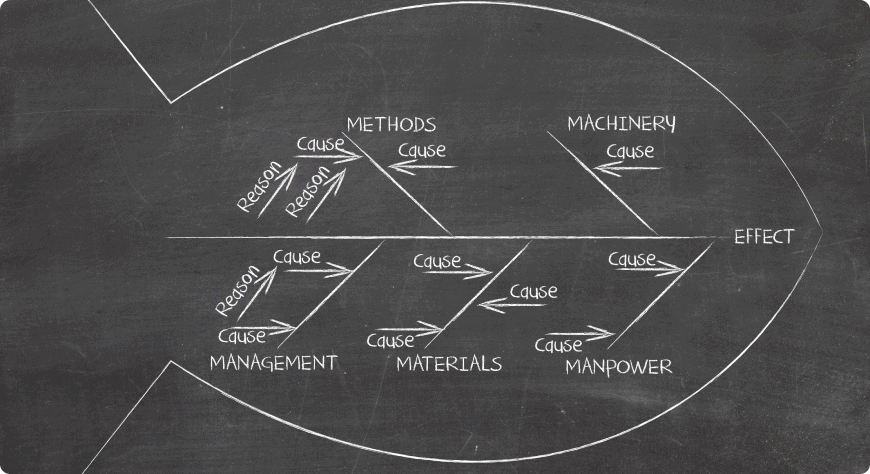
This process works well when establishing the root cause:
- Establish the problem – identify what went wrong, what are the symptoms?
- Understand the problem – a flow diagram may help, as this shows where the breakdown occurred
- Mind map the cause of the problem – organise your thoughts and those who are working alongside you in determining the root cause
- Collect and analyse the data – are there any underlying issues that have been identified?
- Identify the root cause – you may wish to use the 5 Why’s or the Fishbone Diagram
- Eliminate the root cause – put the processes in place and make the necessary changes
- Implement the solution – ensure that everyone is aware of the new process or changes made, otherwise they may continue on as before
- Monitor the solution
Measure the effectiveness
We need to ensure that the correct root cause has been identified and an effective solution has been implemented. You may want to test the corrective actions, to make certain that they are appropriate for the situation. If the corrective action is not right, it might mean going back to the drawing board and completing the process again, but there are rewards to be had for the work you are undertaking.

The corrective action should then be verified to confirm the elimination of the root cause. Following this, the ongoing controls need to be put into place:
- further monitoring to ensure that the root cause has been eliminated
- and the management system is working to its full potential.
Herein lies the real benefits – issues are identified, corrective and preventative actions are put into place, and the non-conformity is closed out. The business continually improves and reaps the many rewards.
Contact Us
Phone Number
0208 720 6851Email Address
meggan@isoLogic.co.ukReady to strengthen your health and safety compliance?
It can feel overwhelming at first, but you don’t have to go through it alone. We’ll take the stress out of the process, guide you every step of the way, and make sure your business is fully ready for certification – and beyond.