Demystifying the “Plan–Do–Check-Act” Cycle
When an organisation first starts on their journey towards ISO certification, it can feel as daunting as a trip to the dentist – painful and complicated.
However, I’m here to tell you that this couldn't be further from the truth.
isoLogic specialises in assisting companies achieve and continually maintain certification to:
- ISO 9001 (Quality management systems)
- ISO 14001 (Environmental management systems)
- ISO 45001 (Occupational health and safety management systems)
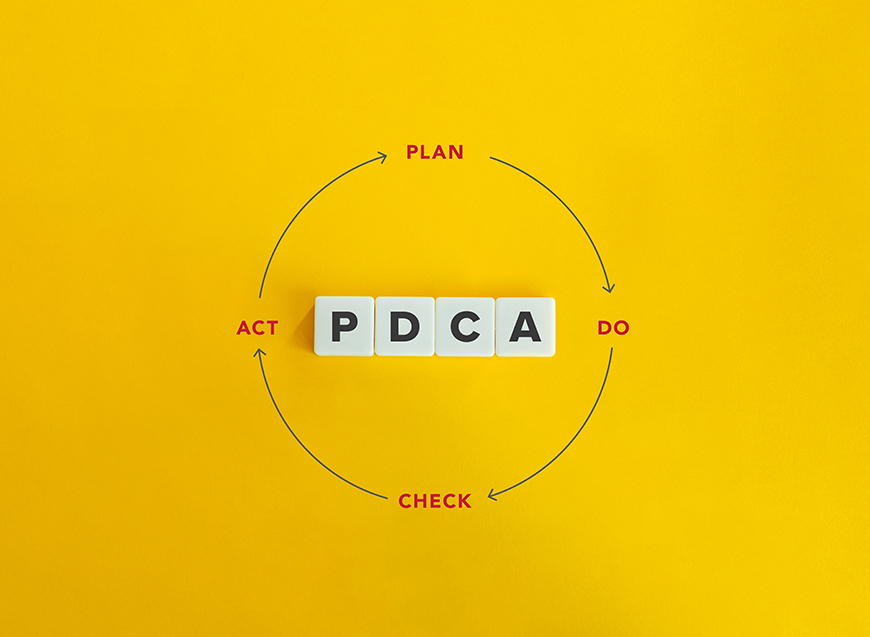
All these standards follow the Plan-Do-Check-Act (PDCA) cycle, a simple yet powerful process It lets an organisation ensure that its procedures are adequately resourced and managed, and that opportunities for improvement are determined and acted on.
The PDCA cycle can be applied to individual processes and to the management system as a whole.
Breaking down the PDCA cycle
To make this concept easy to understand, let’s think of PDCA in the context of something exciting – planning a holiday!
Before embarking on a trip, we need to define the ‘Context of the Organisation’ - or in this case, the holiday.
- What internal and external factors will influence the holiday?
- Do we need to consider external elements like the political and social environment of the destination (personally, I wouldn’t want to travel to a conflict zone)
- Then consider internal factors such as interests (do we want a history-rich trip, a nature-focused adventure, or both?).
- Time and budget are also key considerations.
Next, we must identify the ‘Needs and Expectations of Interested Parties’.
- Does the chosen destination welcome tourists (here, the locals could be a factor)?
- Is a visa required, and how complicated is the application process (the Government or Embassy could be a factor)?
- If we are not travelling alone, what do our companions want from this trip (or for a business what do clients expect)?
Once we have defined these considerations, we want to establish the ‘Scope’. In the case of the holiday: we are going to Japan.
As the leader on this holiday, I am committed to making it enjoyable and smooth. Since I’m travelling with friends, I need to consider their needs (or for a business, customer focus), otherwise, I risk ending up exploring Japan alone!
Now that we have a clear direction, it’s time to plan. The better we define the context and scope, the easier it will be to build on the next steps. If we don’t know what we want to achieve, it’s going to make for a very bumpy road.

Plan – plan what you are doing
First, we need start planning the holiday by determining the best time to go. We’ve agreed that April is best, as we can see the Sakura (cherry blossoms). However, the weather in April can be unpredictable, so we need to pack for both sunshine and rain.
We also require a valid passport and an international driving license, if renting a car. To make the most of our limited time, we research destinations using Google, Instagram, and advice from friends. The more information we gather beforehand, the better prepared we will be.
However, we must also stay flexible to accommodate any unexpected changes. (In ISO terms, this comes under planning of changes.) We don’t want to go trekking in the pouring rain, so will swap with a day planned for a museum visit. We might decide to swap the Mount Fuji visit to a clear day instead of a cloudy day, if we want to see it in all its glory.
An important part of planning is identifying risks and opportunities. A key risk when travelling is safety. Luckily, Japan has a low crime rate, so additional safety measures aren't needed, and we have the opportunity to enjoy the day until late in the evening.
A more pressing risk is the language barrier. English is not widely spoken, and Japanese characters are completely unfamiliar to Westerners. To manage this, we plan ahead with some control measures: we can use Google Translate’s photo feature and request that the rental car’s Satnav is set to English in advance.
Additionally, we define key procedures for our trip, such as how to navigate on Japan’s public transport efficiently, avoid overcrowded tourist spots and ensure we respect cultural norms in different settings.
When we consider the PDCA cycle in terms of ISO 9001 it can briefly be described thus: to establish the objectives of the system and the necessary processes; resource requirements in accordance with customer requirements, and the business’ policies; and to identify and address the risks and opportunities.
Do – do what you said you would do
Now, it’s time to execute the plan!
Just as in an organisation, we must allocate resources wisely. In our group, some will drive, others will find restaurants that cater to our dietary needs, and those who have been to Japan before will share their experience to help the rest of us navigate the trip.
Competency and awareness also play a role, as they do in the ISO management systems. Those unfamiliar with Japan’s customs must learn basic etiquette - such as avoiding loud conversations, not eating or drinking on public transport, and understanding proper behaviour in public baths.
To ensure everything runs smoothly, we need effective communication - both between ourselves and with the locals. We could establish a group chat and decide how to stay connected with family and friends whilst away.
We also need to ensure that our travel plan is the same amongst the group, so no one ends up using an old version. Therefore, we need to have document control, and we will have a version number that changes as we make changes to the document.
Check – check that you did it right
As the trip unfolds, we assess whether our plans are working:
- Customer Satisfaction – Is everyone enjoying themselves?
- Internal Audit – Are we following our itinerary? Have we adhered to the customs we learned? Did anyone wear too much perfume and almost get us kicked out of a sushi house?
- Management Review – The main organisers check in to see what’s going well and what needs adjusting.
In ISO 9001 terms, this checking phase involves reviewing the data collected and analysing the results. The aim here is to compare the results to the objectives, identify any discrepancies and to determine the root cause of any issues. This is important as it provides insights into the plan’s effectiveness and helps businesses identify areas for improvement.

Act – act on anything that went wrong
As with any experience, reflection is key. When things don’t go as planned, we must take corrective action.
For instance, some friends who previously travelled to Japan encountered an issue with their rental car. To drive in Japan, an international driving permit is required, but there are two conventions.
Since they were also driving in other countries, they mistakenly got a permit valid for the first country on their list, but not for Japan. Upon arrival, they couldn’t rent a car, forcing them to change their entire trip.
We learned from their mistake and double-checked our documents multiple times before leaving.
By applying these lessons, we continuously improve our travel planning process, ensuring each trip is better than the last.
When used in terms of the ISO framework, the ‘Act’ phase is where we review performance and learn from it. Evidence gathered in the ‘Check’ phase helps us make decisions about how successful the project has been. Then we can take these learnings through to the next iteration of the PDCA cycle.
The power of the PDCA cycle
The PDCA cycle isn’t just an abstract concept. It’s a simple, practical tool for structured problem-solving and ongoing improvement.
Whether you’re managing an ISO certified management system, or planning a dream vacation, following these four steps can lead to better decisions, smoother execution, saving resources, and successful outcomes.
So, next time you hear about ‘Plan, Do, Check, Act’, think about your last holiday. Was it well-planned? Were risks considered? Did you adjust plans as needed? If so, congratulations, you were already using PDCA without even realising it!
Contact Us
Phone Number
0208 720 6851Email Address
meggan@isoLogic.co.ukLet’s Work Together!
From implementing and maintaining management systems to supporting your business with health, safety and wellbeing, isoLogic is here to support you. Contact us today to learn more.